
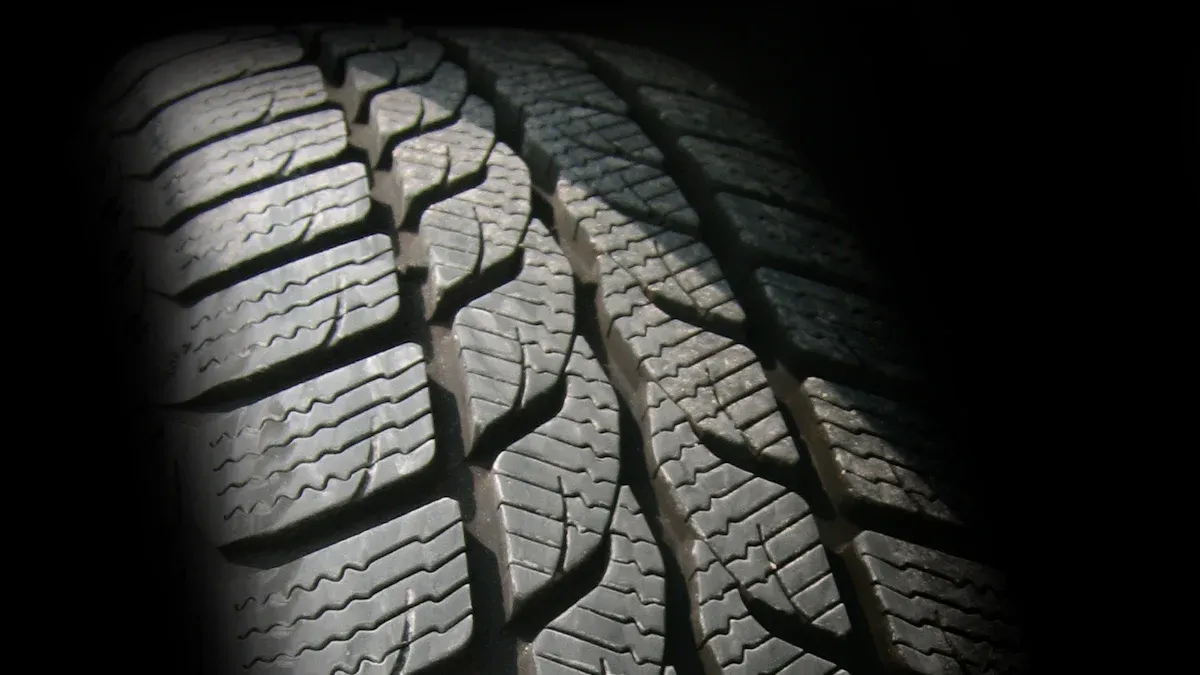
Tread depth tires are crucial for your vehicle’s safety and performance. The tread depth of your tires affects how well your car grips the road, how it handles, and how much fuel it consumes. For instance, having the correct tread depth helps your tires maintain grip on various surfaces. It also enhances your car’s handling by ensuring good contact with the road, which can influence your vehicle’s fuel efficiency due to rolling resistance.
Aspect | Impact |
|---|---|
Vejgreb | Tread depth tires and design help grip on different surfaces (dry, wet, snow-covered). |
Håndtering | Good tread patterns in your tires help your car handle better by maintaining good contact with the road. |
Brændstoføkonomi | Tread depth designs affect rolling resistance, which significantly impacts fuel consumption. |
Vigtige punkter
Tjek din dækmønsterdybde often. You can use the penny test or a tread depth gauge. This makes sure your tires are safe and work well.
Change your tires when the tread depth is 4/32 inches. This gives you better grip and handling, especially when it’s wet. It can help stop accidents and keep you safe.
Keep the right tire pressure. Rotate your tires every 5,000 to 7,500 miles. This helps them wear evenly and last longer.
Tire Tread Depth Basics
What is Tire Tread Depth?
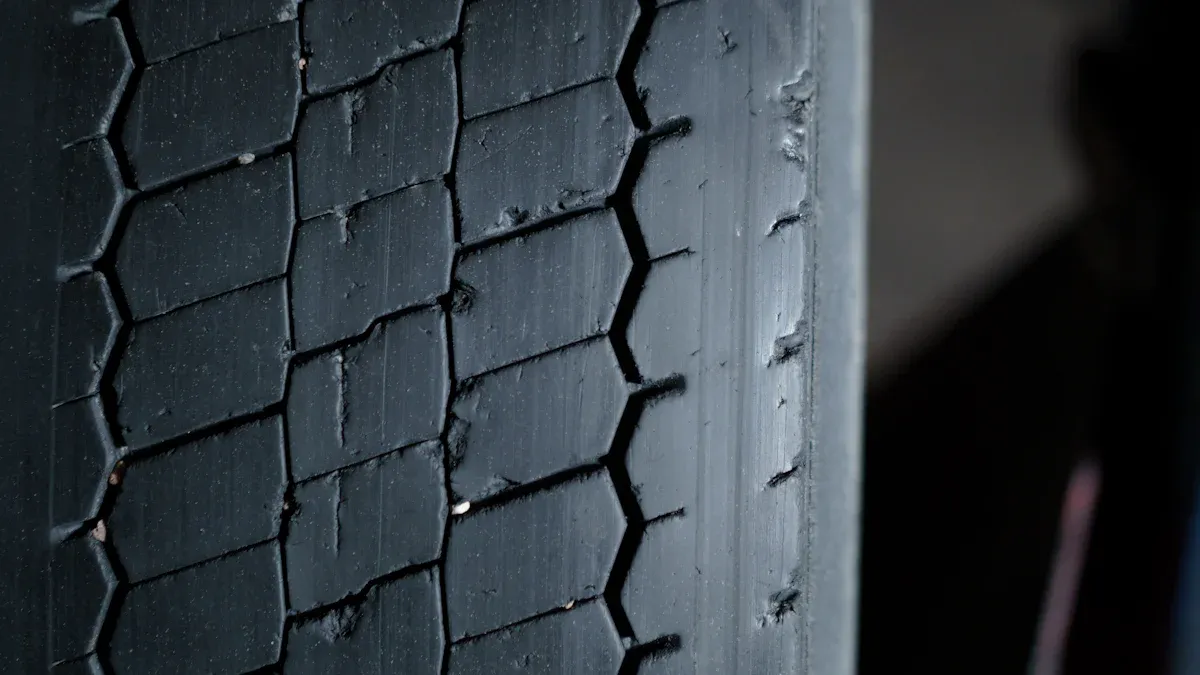
Tire tread depth is how deep the grooves are on your tire. It is measured in 32nds of an inch. Having the right tread depth is very important for safety and grip on the road. You can check the tread depth in different ways, like the penny test or using a special gauge. Here are some common ways:
Metode | Beskrivelse |
|---|---|
Tread Wear Indicator Bars | These bars are built into the tire. They show when the tread is worn down too much. |
Penny-test | This easy test uses a penny to check tread depth by putting it in the tread grooves. |
Dækmønsterdybdegauge | This tool is made to measure the tread depth in both 32nds of an inch and millimeters. |
Importance of Tread Depth for Safety
Keeping the right tire tread depth is very important for your safety. If the tread is too shallow, it can cause problems. For example, deeper treads help grip wet or slippery roads. This means shorter stopping distances. Good tread depth also helps move water away from the tire, which stops hydroplaning. But if the treads are worn down, traction decreases. This leads to longer stopping distances and a higher chance of skidding.
Safety groups say the minimum tread depth for safe driving is usually 4/32″. If your tread is below this, you should think about getting new tires. Here’s a quick look at the recommendations:
Source | Minimum Dækmønsterdybde | Anbefaling |
|---|---|---|
California Law | 2/32″ for passenger tires, 4/32″ for steer tires on commercial vehicles | Replace at 4/32″ |
DOT Regulations | 4/32″ | Remove tires at 4/32″ |
Tire Care Essentials | 2/32″ | Ikke Anvendt |
By checking your tire tread depth often, you can have a safer driving experience.
How to Check Tread Depth Tires
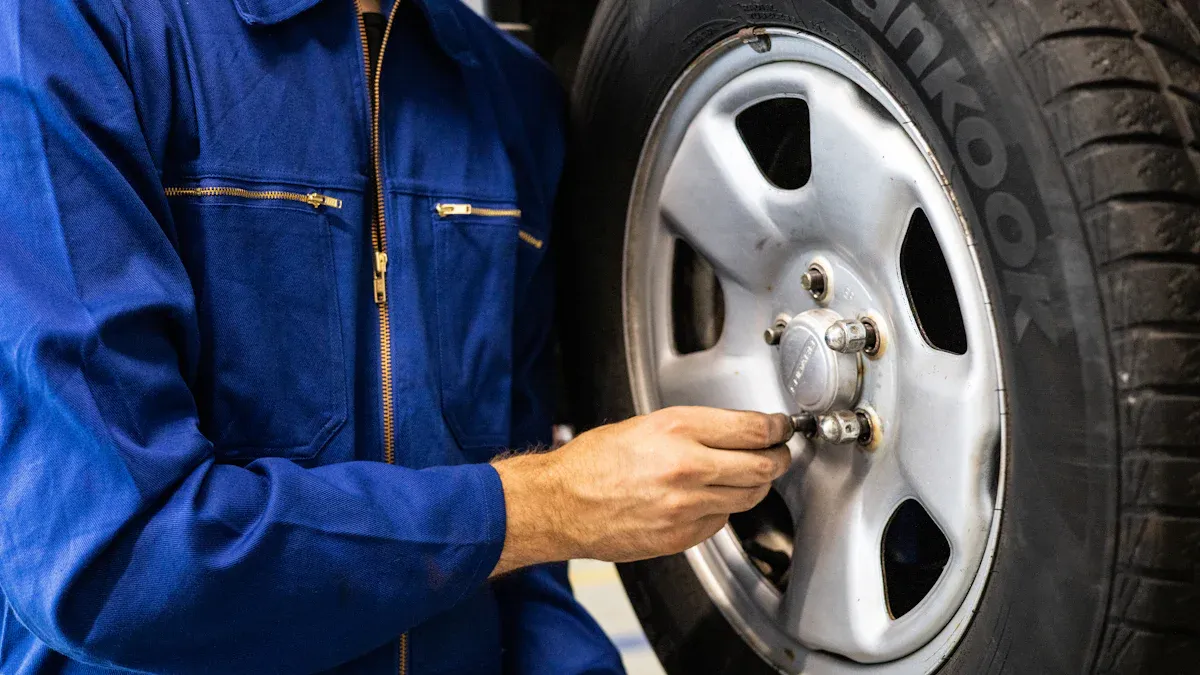
Checking your tire tread depth is essential for maintaining safety and performance. You can use several methods to measure tread depth accurately. Here are three popular techniques:
Penge Testen
The penny test is a quick and easy way to check your tire tread depth. Follow these steps:
Grab a penny and hold it by the edges.
Insert the penny into the tread groove with Abraham Lincoln’s head facing down.
Observe whether Lincoln’s head is covered by the tread.
If his head is covered, your tread depth is above 2/32″, which is acceptable. If you can see his head, it’s time to replace your tire. This method provides a simple estimate but is not as precise as other methods.
Kvart-testen
Den kvartest is another effective method for measuring tire tread depth. It offers a more reliable indication of when to replace your tires. Here’s how to do it:
Take a quarter and hold it by the edges.
Place the quarter into the tread groove with George Washington’s head facing down.
Check if Washington’s head is visible.
If you can see his head, your tread depth is too shallow. For steering axle tires, the minimum tread depth is 4/32″. For other tires, it is 2/32″. This method helps you detect wear earlier, ensuring you replace tires sooner for safety.
Brug af et dækdybde-måler
For den mest nøjagtige måling, bør du overveje at bruge en mønsterdybdemåler. This tool provides precise readings and eliminates guesswork. Here’s how to use it:
Insert the probe of the gauge into the tread groove.
Press down until the base of the gauge is flush with the tire surface.
Read the measurement displayed on the gauge.
Målemetode | Nøjagtighedsniveau | Subjectivity Level |
|---|---|---|
Mønsterdybdemåler | Høj | Lav |
Penny-test | Lav | Høj |
Using a tread depth gauge ensures you get an accurate measurement of your tire tread depth. This method is especially useful if you want to monitor your tires closely.
Regularly checking your tire tread depth is crucial. Tire problems contribute to en ud af 11 køretøjskollisioner. Maintaining proper tread depth can help you avoid dangerous situations on the road.
Hvornår skal man skifte dæk
Tread Depth Guidelines
It is very important to know when to change your tires for safety. Tire makers and safety experts suggest certain tread depth levels for the best performance. Here’s a quick look at the recommendations:
Dækmønsterdybde | Anbefaling |
|---|---|
2/32″ | This is the minimum legal limit; tires are worn out. |
3/32″ – 4/32″ | Change tires for better safety, especially in bad weather. |
11/32″ | New tires usually have this tread depth. |
In many places, the minimum safe tire tread depth is 2/32″. But for better grip and handling, especially on wet roads, think about replacing your tires when they reach 4/32″.
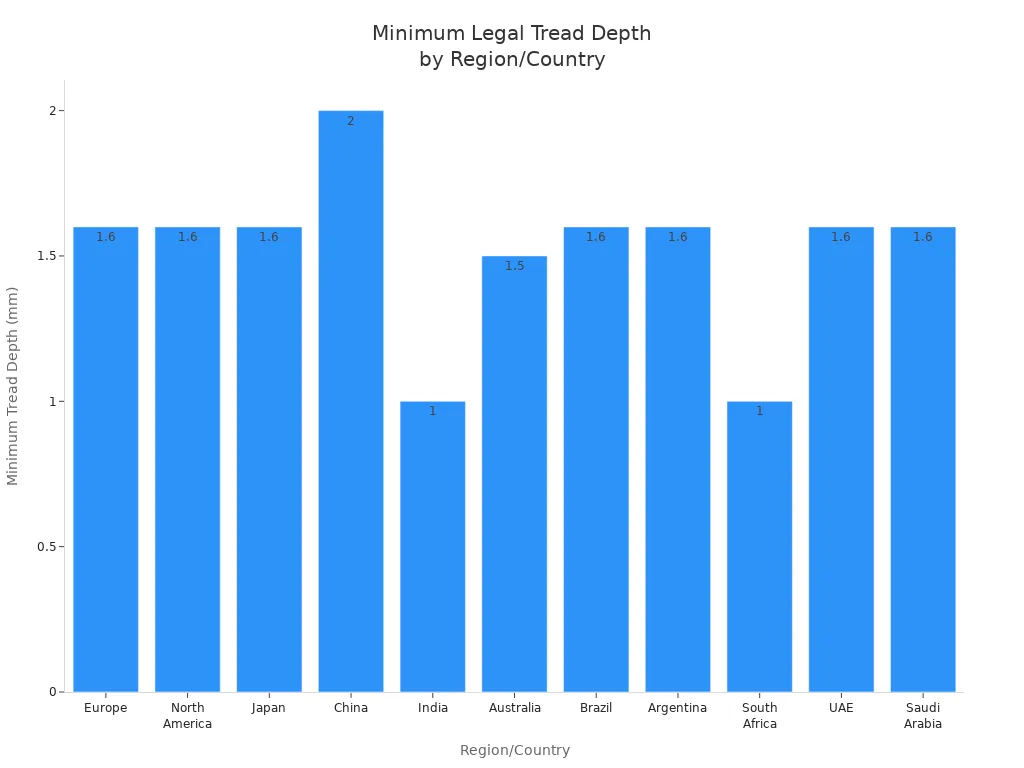
Here’s a summary of the legal minimum tread depth rules in different areas:
Region | Minimum Dækmønsterdybde | Yderligere Bemærkninger |
|---|---|---|
Europa | 1,6 mm (2/32 tommer) | Standard på tværs af EU-lande |
Nordamerika | 1,6 mm (2/32 tommer) | Varierer efter stat i Danmark; Canadiske provinser kan variere |
Asien | Varierer efter land | Japan: 1.6 mm (2/32 inches); China: 2 mm (0.079 inches); India: 1 mm (approx. 0.039 inches); Others vary |
Australien | 1,5 mm (0,059 tommer) | Ensartet over hele landet |
Sydamerika | Varierer efter land | Brazil and Argentina: 1.6 mm (2/32 inches); Others vary |
Afrika | Varierer efter land | South Africa: 1 mm (0.039 inches); Others vary widely |
Mellemøsten | Varierer efter land | UAE and Saudi Arabia: 1.6 mm (2/32 inches); Others vary |
til at tænke på nye dæk.
You should check your tires often for tegn på slid. Here are some common signs that it’s time to get new tires:
Slipping and Stopping: If you see wheel spin or skidding, your tread might be worn.
Sidewall Cracks: Hitting curbs or objects can cause cracks in the sidewall.
Tread Wear Indicators: These bars show up when the tread is worn down.
Visual Inspection: Look for uneven wear, bulges, or cracks.
Dækmønsterdybde: Use the penny test; if you see Lincoln’s head, replace the tires.
Dæk Skade: Check for cuts, scrapes, cracks, and bulges.
Alignment Issues: Wear on the inner or outer edges can mean alignment problems.
Overinflation: Too much wear in the center suggests overinflation.
Underinflation: If the edges wear more than the center, it means underinflation.
Worn Tire Tread: A smooth look or few ridges means the tread is worn.
Sidevægsskader: Look for cracks, bubbles, or bulges.
Dry Rot: Old and brittle rubber can weaken the tire.
By watching for these signs, you can keep your tires safe and working well. Regular checks help you avoid dangerous situations on the road.
Impact of Insufficient Tire Tread
Sikkerhedsrisici
Driving on tires with low tread depth is very dangerous. Worn tires have trouble moving water away from the road. This increases the chance of hydroplaning. When your tires are at 2/32 tommer or less, they do not resist hydroplaning well. This can cause you to lose control, especially when it’s wet. Here’s how worn tires affect safety:
Aspect | Forklaring |
|---|---|
Water Evacuation | Worn tires with shallow tread are not good at moving water away from the road. |
Traction and Grip | Deeper treads give better grip in wet weather, helping keep contact with the road. |
Bremselængde | Enough tread depth helps shorten stopping distance in wet conditions, lowering accident chances. |
Ydelsesproblemer
Low tire tread depth also affects how your vehicle performs. As the tread gets lower, your braking distance gets longer. For example, at 10/32 inches, it takes about 234 feet to stop. But at 2/32 inches, it can take up to 356 feet. This longer stopping distance can be very important in emergencies. Also, turning performance gets worse. Worn tires can lower cornering speeds by 10-18% on wet roads. This loss of grip can make your car unstable and cause swerving, especially during quick turns.
Additionally, driving on worn tires can hurt fuel efficiency. Tires that are not in good shape need more energy to roll, which means you use more fuel. Checking your tire tread depth often and replacing worn tires can help keep you safe and ensure your vehicle works well.
Keeping the right tire tread depth is very important for your safety and how well your vehicle works. Check your tread depth often using the penge test or a tread depth gauge. Here are some tips for maintenance:
Maintenance Tip | Beskrivelse |
|---|---|
Check Tread Depth Regularly | Use a tread depth gauge or the penny test each month to find wear early. |
Maintain Proper Tire Pressure | Check and keep tire pressure at the right levels to help with even tread wear. |
Rotate Tires Periodically | Move tires around every 5,000 to 7,500 miles to help them wear evenly and last longer. |
By following these tips, you can improve your vehicle’s safety, performance, and how long it lasts.
Ofte stillede spørgsmål
Hvad er den minimale mønsterdybde for sikker kørsel?
Den minimum dækmønsterdybde for safe driving is typically 2/32 inches. However, replacing tires at 4/32 inches is recommended for better safety.
Hvor ofte skal jeg tjekke min dækmønsterdybde?
Du bør at kontrollere din dækmønsterdybde at least once a month. Regular checks help ensure your tires remain safe and effective.
Can I drive on worn tires?
Driving on worn tires is dangerous. Low tread depth increases the risk of hydroplaning and longer stopping distances, compromising your safety.
Se også
Brug af en dækmønsterdybdegenerator til præcise målinger
Vigtigheden af at overvåge dækmønsterdybden for sikkerhed
Forståelse af smarte dækmønsterdybde detektorer og deres funktion


 Danish
  English
  Spanish
  Italian
  Dutch
Dutch  Finnish
  Swedish
  Greek
Greek  Turkish
  Polish
  Czech
Czech  Japanese
  Hungarian
  Russian
  Korean
  Romanian
  Bulgarian
  Slovenian
  Portuguese